

When should double jaw surgery be considered for sleep apnea treatment?

Hello. The Bareun Outline Oral and Maxillofacial Surgery Dental Clinic, Oral and Maxillofacial Surgery Specialist Sanghoon Leeis the value.

Have you ever woken up feeling unusually tired despite sleeping, or been told by others that you snore loudly, and worried about it? Snoring and sleep apnea, which are easily dismissed as mere sleeping habits, are actually clear ‘diseases‘ that obstruct oxygen supply to our bodies. In particular, these symptoms are closely related to the 'jaw structure', which serves as the airway we use to breathe every day and provides the central structure of our face.

Today on The Bare Contour blog, we'll discuss what was covered in the YouTube video Six key questions about sleep apnea and snoring, from causes and dental treatments to mouth breathing habits in growing childrenHere's a breakdown in an easy-to-understand Q&A format.

Q1. Does the habit of breathing through your mouth when you are young actually change the shape of your jawbone?

To get straight to the point, it can actually have a significant impact on jaw growth and facial shape. Of course, this is not for adults Growing childrenThis story applies to.

If children have difficulty breathing through their nose for a long time due to rhinitis or other conditions, they naturally start breathing through their mouth, which can become a habit, leading them to primarily engage in mouth breathing instead of nasal breathing. The biggest problem in this situation is the ‘tongue position.'.

When breathing normally through the nose, the tongue rests on the roof of the mouth, exerting upward pressure (acting as a brace) on the jaw. Our bones develop their shape under this pressure. However, when the mouth is open and the tongue drops, the palate cannot grow roundly and instead becomes pointed and narrow.

  • Changes that occur when mouth breathing is prolonged: The palate narrows, causing the molars on both sides to also narrow. Scissors biteThis causes the teeth to become crooked.
  • Repeatedly pulling the chin back can cause the upper jaw to droop downwards or develop unfavorably for the lower jaw's growth, ultimately leading to a long and narrow face shape (adenoid face).

Q2. I snore heavily. Could this be related to my jaw structure?

Yes, it's very deeply related. Snoring is not just a matter of restless sleep; it's a sign that there is an obstruction in the airway, the path air takes during sleep.

Breathing passages can also be affected by soft tissue issues such as nasal congestion, rhinitis, enlarged tonsils and adenoids, and enlarged uvulas. However, individuals with a particularly small and significantly receded lower jaw structure (underbite skeletal structure) are very likely to snore severely. This is because the receding jaw physically narrows the breathing passage beneath the chin (nasopharynx, oropharynx). When air flows through a narrowed airway, surrounding tissues vibrate intensely, which manifests as snoring sounds.

Q3. I've been diagnosed with sleep apnea. Can it be treated at a dental clinic?

Yes, it can definitely be treated at a dental clinic. Sleep apnea is a significant health-threatening condition, and dentistry (particularly oral medicine or oral and maxillofacial surgery) also offers clear solutions for its improvement.

The method primarily used in dental clinics is ‘intraoral device treatment," which artificially moves the lower jaw forward to secure an airway. Recently, many dental clinics are equipped with polysomnography facilities, allowing for precise diagnosis of apnea during an overnight sleep study, followed by treatment.

Q4. What is the principle by which intraoral devices are effective for sleep apnea?

An oral appliance is a device made to fit snugly in your mouth. It clips onto either the upper or lower teeth, While sleeping, keep your lower jaw slightly forward, not dropped back.It is a principle that holds one in place.

When the chin is artificially protruded, the tongue and surrounding muscles attached to the jawbone are also pulled forward. As a result, because it prevents the tongue from blocking the throat and keeps the airway open at the back It can excellently improve sleep apnea symptoms where breathing stops during sleep.

Q5. If sleep apnea is severe, can double jaw surgery be a solution?

In the treatment of sleep apnea, double jaw surgery can be the definitive and most reliable solution.

As stated in the treatment guidelines of the Stanford Sleep Center, a world-renowned sleep medicine institution, the final treatment for sleep apnea is MMA (Maxillomandibular Advancement). This is commonly referred to as ‘double jaw surgery" in Korea.

This surgery involves moving both the upper and lower jaws forward to permanently and significantly widen the narrowed airway space. However, we do not recommend double jaw surgery unconditionally from the outset. It is considered as a last resort for severe skeletal apnea patients who do not show improvement even after undergoing conservative treatment steps such as intraoral devices or CPAP machines.

Q6. My child sleeps with their mouth open. Should I start orthodontic treatment or therapy now?

If the child is simply sleeping with their mouth open temporarily on a particularly tiring day, there's no need to start immediate correction or extensive treatment.

However, if, upon close observation, the child consistently shows clear signs of ‘mouth breathing" – seeming uncomfortable breathing through their nose and only breathing through their mouth – the situation is different. If they always have their mouth open, not just when sleeping but also during the day, or if their nose always appears blocked, then it is strongly recommended that you visit a hospital to check for any structural causes. This is because the best time to identify and correct the cause of skeletal deformities during growth is before they become fixed.

To find the root cause of snoring and sleep apnea, a comprehensive analysis is needed, covering facial bone structure, dental occlusion, temporomandibular joints, and the condition of the soft tissues surrounding the airway.

At The Barun Face Oral and Maxillofacial Surgery, we provide the safest and most precise solutions, from intraoral devices to surgical approaches if necessary, by thoroughly analyzing your skeletal structure based on our extensive clinical experience in facial bone surgery. If you are suffering from fatigue due to stuffy breathing at night preventing you from getting a good night's sleep, please feel free to visit us anytime for a precise diagnosis from our oral and maxillofacial surgery specialists.

This was Dr. Sanghoon Lee, the head doctor of The BareunGwak Oral and Maxillofacial Surgery Dental Clinic. Thank you.
[Information and Location]

  • Healthcare Institution Name: The Right Contour Oral and Maxillofacial Surgery Center
  • Address: 2nd and 4th Floor, 7, Seojeon-ro, Busanjin-gu, Busan Metropolitan City (Near Seomyeon Station Exit 8)
  • Medical professional explanation: Chief Director Lee Sang-hoon (Oral and Maxillofacial Surgeon)

※ All surgical and device treatments may cause side effects such as pain, temporomandibular joint discomfort, and changes in occlusion depending on the individual's condition and skeletal structure. Therefore, please make a careful decision after thorough consultation and precise diagnosis with a skilled specialist.


Double Jaw Surgery vs. Contouring Surgery,
What surgery do I need for my facial asymmetry?

Hello. This is Dr. Sanghoon Lee, a specialist in Oral and Maxillofacial Surgery at The Bare Outline Oral and Maxillofacial Surgery Dental Clinic.

Have you ever looked in the mirror or had your photo taken and suddenly noticed that your left and right sides look different, leading you to worry? Facial asymmetry can be a simple aesthetic concern, but it often stems from structural misalignments of the internal bones or abnormalities during the growth process. Therefore, it's crucial to diagnose the cause thoroughly and find the appropriate solution accordingly.

Today on the The Bareun Outline blog, we will summarize the four key questions covered in the video about facial asymmetry – from diagnosis to treatment methods, and the influence of causes and habits – in an easy-to-understand Q&A format.

Q.1 How is facial asymmetry diagnosed?

To precisely diagnose the condition of facial asymmetry, a detailed photographic examination is required. 3D CT scans, etc., are helpful.This is because a precise diagnosis using digital equipment is important to clearly understand the internal structure of the bone.

  • Self-assessment criteria: Assuming both eyes are at the same height, if you imagine a horizontal plane and draw a line straight down from the midpoint between the eyes, a deviation of the chin from this center line can suggest asymmetry.
  • Differences in approach depending on the diagnosis: If the tip of your chin is clearly deviated from the midline Double Jaw SurgeryThis is often considered, and if the chin is well-centered but only one cheek area is uniquely large or prominent Contour surgeryThis can be an alternative. Further examination will determine whether this is a skeletal issue or a soft tissue (flesh) issue.

Q.2 Can facial asymmetry be corrected with orthodontic treatment alone?

In cases of skeletal asymmetry with a jaw deviated to one side, there may be limitations in moving the actual skeletal position of the chin with orthodontic treatment alone.

  • ‘The metaphor of a ‘bus' and 'passengers': To help you understand, I often use an analogy. It's like when a bus is parked leaning to one side, the passengers moving seats inside won't change the bus's position. Orthodontics is like adjusting the positions of the ‘passengers inside the bus,‘ and surgery is like moving 'the bus itself.' Therefore, asymmetry with complex skeletal causes may be difficult to improve satisfactorily with orthodontics alone, so a surgical approach is sometimes considered as well.

Q.3 What happens if you maintain bad habits after surgery?

Even if skeletal improvements are made, if poor daily habits are maintained, subtle changes may occur.

  • The relationship between bones and muscles: It is uncommon for the skeletal structure itself to be completely reconfigured. However, if the habit of chewing food on one side only (unilateral mastication) continues for a long period, the masticatory muscles on the frequently used side will develop. As the strength and volume of the muscles increase, the surrounding bones may also thicken slightly to accommodate this. Even though the jawbone itself does not move entirely, it can still cause an apparent imbalance, so we recommend correcting the habit for a stable prognosis.

Q.4 What causes facial asymmetry? (Congenital vs. Acquired)

Many people ask, “Does sleeping on one side or resting my chin on my hand worsen facial asymmetry?” However, significant skeletal facial asymmetry is not easily caused by everyday habits alone.

  • Congenital/Skeletal causes: It is often due to congenital imbalances in skeletal growth that manifest during development, in which case surgical treatment may be an alternative for structural improvement.
  • Acquired causes If the growth plate in the temporomandibular joint area is injured due to childhood accidents or trauma, the growth in that area may not proceed normally, leading to acquired asymmetry. Asymmetry caused by daily habits is typically closer to asymmetry due to muscle imbalance, such as in the chewing muscles, rather than deformation of the skeletal structure itself.

Facial asymmetry is a condition that requires a comprehensive analysis of the three-dimensional structure of the facial bones, the alignment of the teeth (occlusion), and the condition of soft tissues such as muscles. At The Bareun YunGwak, we analyze each patient's minute skeletal asymmetry and daily habits based on our extensive clinical experience to develop a treatment plan that prioritizes safety.

If you are experiencing distress or discomfort due to facial asymmetry or jaw misalignment, please feel free to visit us at any time for a consultation. Based on a precise analysis, we will work with you to consider a treatment plan that prioritizes your safety.

This was Dr. Sanghoon Lee, the head doctor of The BareunGwak Oral and Maxillofacial Surgery Dental Clinic. Thank you.

  • Healthcare Institution Name: The Right Contour Oral and Maxillofacial Surgery Center
  • Address: 2nd & 4th Floor, 7 Seojeon-ro, Busanjin-gu, Busan (Near Seomyeon Station)
  • Medical professional explanation: Chief Director Lee Sang-hoon (Oral and Maxillofacial Surgeon)

※ All treatments may cause side effects depending on the individual's condition, so please make a careful decision after sufficient consultation with a specialist.

Could I have a temporomandibular joint disorder too?
Temporomandibular Joint Disorder (TMJD) A to Z

Hello. This is Dr. Sanghoon Lee, a specialist in Oral and Maxillofacial Surgery at The Bare Outline Oral and Maxillofacial Surgery Dental Clinic.

When you suddenly hear a sound or feel pain in your jaw during your daily life, “Could I possibly have temporomandibular joint disorder too?” Many people suffer from unspoken worries. As the temporomandibular joint is a complex and sensitive joint that constantly moves in our face, it is crucial to have accurate information and to address it correctly from the early stages.

In today's blog post from The Bare Contours, we will address the key questions about temporomandibular joint (TMJ) disorders that patients most frequently ask in the clinic, presented in an easy-to-understand Q&A format.

Q.1 Does a popping sound in your jaw indicate TMJ disorder?

Not everyone needs immediate treatment just because their jaw makes a sound.

  • Cases where you can watch: If it's an early stage with only occasional ‘clicking’ sounds and no pain or difficulty opening your mouth, it's okay to carefully observe and manage it without starting aggressive treatment.
  • When treatment is absolutely necessary: With sound Pain is presentstarted to happen, or it's not just a clicking sound, but a grinding sound like sand ‘The sound of crunchingIf it does, the condition may be quite advanced, so you should see an oral and maxillofacial surgeon for a precise diagnosis.

Q.2 What are the treatment methods for temporomandibular joint (TMJ) disorders?

The temporomandibular joint is like any other joint in our body, so rather than considering drastic surgery from the start, it's better to opt for less physically demanding treatments. Prioritize non-operative (non-surgical) conservative treatment.It is the standard way to do it.

  • Treatment Process: First, it is the first step for the patient to hear and understand why the cause arose. After that Medical treatment, correction of bad habits, physical therapyPerform that first. If there is still no improvement, Temporomandibular joint apparatus (splint) treatmentThis is considered, and surgery is a last resort to be considered when all non-surgical methods are ineffective.

Q.3 Can habits also cause temporomandibular joint disorders?

Yes, everyday habits that you do unconsciously can have a critical impact on your temporomandibular joint, so it's very important to pay attention to your usual lifestyle patterns.

  • Sleep bruxism It can cause joint and tooth disorders by unintentionally transferring immense force directly to the joints and teeth during sleep. If you grind your teeth severely, you should consider preventive devices.
  • Chewing on only one side of your mouth habit: You are consistently applying excessive force to a specific joint. If this continues long-term, it can cause significant problems with joint balance, so it is recommended that you consciously chew evenly with both sides.

Q.4 Do splints really work?

Splint therapy is clinically important in the treatment of temporomandibular joint disorders A device with considerable and certain effectivenessis the value.

  • Device operating principle: Our jaws are guided to move only to a position where the teeth are forced to interlock. However, wearing a splint can guide the jaw to ‘the position where the joint feels most comfortable.".
  • Joint protection role applied to the joints Buffer immense pressure in the middleThis prevents ligaments or disks inside from being deformed or damaged by pressure. Even if the effect is not immediate, you can achieve good results with long-term, consistent use.

Q.5 What factors should be considered when choosing a hospital for TMJ treatment?

Temporomandibular joint disorders encompass teeth occlusion, facial bone structure, and the soft tissues surrounding the joint. ‘The quality of analysis is key.Based on my 14 years of clinical experience, I have been meticulously analyzing each patient’s subtle skeletal structure and habits and developing treatment plans tailored to their individual needs. The key to ensuring patient satisfaction lies in verifying how thoroughly the medical team considers each patient’s case and how closely they are personally involved in the entire process to ensure a precise diagnosis.

Since temporomandibular joint (TMJ) disorders are the first step in lifelong jaw health, the expertise of an oral and maxillofacial surgeon, who specializes in facial bones and oral structures, is paramount.

If you are currently experiencing discomfort due to clicking in your jaw, pain, or difficulty opening your mouth, please feel free to visit us at any time for a consultation. We will precisely and thoroughly analyze your condition and help you find the safest and most appropriate path to treatment together.

This was Dr. Sanghoon Lee, the head doctor of The BareunGwak Oral and Maxillofacial Surgery Dental Clinic. Thank you.

Healthcare Institution Name: The Right Contour Oral and Maxillofacial Surgery Center Address: 2nd & 4th Floor, 7 Seojeon-ro, Busanjin-gu, Busan (Near Seomyeon Station) Medical professional explanation: Chief Director Lee Sang-hoon (Oral and Maxillofacial Surgeon)

※ All treatments may cause side effects depending on the individual's condition, so please make a careful decision after sufficient consultation with a specialist.
From the 3 facial contouring types to the causes of a square jaw
Frequently Asked Questions Before Facial Contouring Surgery

Hello. I am Dr. Lee Sang-hoon, an oral and maxillofacial surgeon at The Barun Gunguk Oral and Maxillofacial Surgery Dental Clinic. When considering facial contouring surgery, many people feel uncertain because they don't know the types of surgery or what method is best suited for them. The facial bones are an area where nerves and blood vessels travel in a complex manner, so it is important to approach it with a precise understanding of its structural characteristics. Today, based on the content discussed in the video, I will objectively present medical information about facial contouring surgery.

Q.1 What are the types of contouring surgery?

Clinically, facial contouring surgery can be broadly classified into three areas: chin augmentation, square jaw reduction, and cheekbone reduction surgery. Chin surgery involves improving a receding chin or adjusting length by bone osteotomy and repositioning, and sometimes segmental osteotomy is used to reduce or enlarge the width. Square jaw surgery has moved away from past resections focused on the mandibular angle, and is now primarily performed using long curved osteotomy to create a natural curve. Cortical osteotomy, which involves removing a certain amount of the outer cortex of the mandible, may also be performed concurrently to reduce the frontal width. Cheekbone surgery characteristically involves cheekbone reduction surgery, where the cheekbones are rotated and repositioned inward, considering the continuity between the temporal region and the anterior cheekbones.

Q.2 Can I have contouring and double jaw surgery done at the same time?

Simultaneous procedures may be planned depending on anatomical conditions and surgical goals. Double jaw surgery is a functional surgery that corrects occlusion by structurally moving the positions of the maxilla and mandible. Contour surgery is a procedure that refines the external contour lines of the bone structure. Therefore, it can be performed concurrently when correction of jawbone deformities or malocclusion is needed, along with aesthetic improvements to the overall facial proportions such as the cheekbones. In particular, it is relatively common to perform chin surgery in conjunction with double jaw surgery to align and balance the proportions of the mandibular anterior teeth.

Q.3 When is revision facial contouring surgery performed?

Contour revision surgery is considered when bone resection is insufficient or excessive compared to the predicted range. If there is still asymmetry or angularity due to insufficient bone removal, remaining bone can be trimmed through a secondary surgery. However, in cases of over-resection, where the mandibular angle is lost or a depression occurs due to excessive bone removal, the alternatives are much more limited. Bone reconstruction using autologous bone grafts or artificial materials must be performed, significantly increasing the difficulty of the surgery. Therefore, it is important to avoid excessive resection during the initial surgery and to plan conservatively within the scope of maintaining skeletal stability.

Q.4 Is contouring surgery for cosmetic purposes?

Facial contouring surgery is generally considered a cosmetic procedure aimed at improving appearance, as it does not alter the bite. However, there are clinical exceptions where some functional benefits can be obtained. In cases of severe micrognathia, performing a genioplasty to advance the chin forward can retract the muscles around the hyoid bone, partially expanding the upper airway space and potentially improving sleep apnea symptoms. It can also alleviate the issue of the lower lip not closing properly due to a retruded chin. Nevertheless, true prognathism or malocclusion involving misaligned teeth requires orthognathic surgery, not contouring surgery, to correct the bite.

Q.5 How to distinguish between bone and muscle as the cause of a square jaw?

The cause of a prominent square jaw, whether it's due to the bone structure itself or the development of the masseter muscle, can be objectively analyzed through a 3D CT scan. This detailed imaging examination measures the thickness and shape of the bone separately from the volume of the overlying soft tissues. If the assessment reveals that the jaw appears enlarged even though the bone protrusion is not significant, it is highly likely due to masseter muscle hypertrophy. This type of muscle-related square jaw can be improved with relatively simple treatments such as Botox injections, without the need for bone resection. Depending on the precise diagnostic results, masseter muscle reduction surgery may also be considered.

Facial contouring surgery is a highly complex medical procedure that requires careful consideration after thoroughly understanding the anatomical structure of the bone and the location of nerve pathways. Since the thickness of the bone, skin elasticity, and the course of nerves vary for each individual, a precise digital simulation process is essential beforehand. If you require a diagnosis due to facial asymmetry or skeletal imbalance, please visit our clinic to accurately assess your condition based on objective data.

This has been Dr. Lee Sang-hoon from The Bareun Gyunghak Oral and Maxillofacial Surgery Dental Clinic. Thank you.

Healthcare Institution Name: The Right Contour Oral and Maxillofacial Surgery Center Address: 2nd and 4th floors, 7 Seojeon-ro, Busanjin-gu, Busan Metropolitan City Medical professional explanation: Chief Director Lee Sang-hoon (Oral and Maxillofacial Surgeon)

※ All surgeries may cause side effects such as bleeding, infection, and nerve damage depending on the individual's condition. Therefore, please make a careful decision after sufficient consultation with a specialist.

Is it okay to get double jaw surgery for cosmetic purposes?

Hello. This is Dr. Sanghoon Lee, a specialist in Oral and Maxillofacial Surgery at The Bare Outline Oral and Maxillofacial Surgery Dental Clinic.

Many people think that double jaw surgery is only performed for therapeutic purposes, such as severe malocclusion or prognathism. Therefore, we often receive the question, “My occlusion is normal, but can I have double jaw surgery purely for cosmetic reasons?”.

In the past, the title ‘cosmetic double jaw surgery' was unfamiliar, but it has now become established as a category. To get straight to the point, Even if there are no functional problems, you can consider double jaw surgery for the purpose of improving your appearance. Let me explain why I, as an oral and maxillofacial surgeon, say that cosmetic surgery can also be an alternative.

Q.1 Is it okay to have double jaw surgery for cosmetic purposes?

Patients who have no malocclusion or functional abnormalities and undergo surgery to move their jaw backward purely for aesthetic improvement are commonly referred to as having ‘cosmetic double jaw surgery." When the jaw needs to be moved backward for aesthetic improvement even without functional issues, it is difficult to find alternatives to double jaw surgery for physically repositioning it. It's an option worth considering for cosmetic purposes as well.

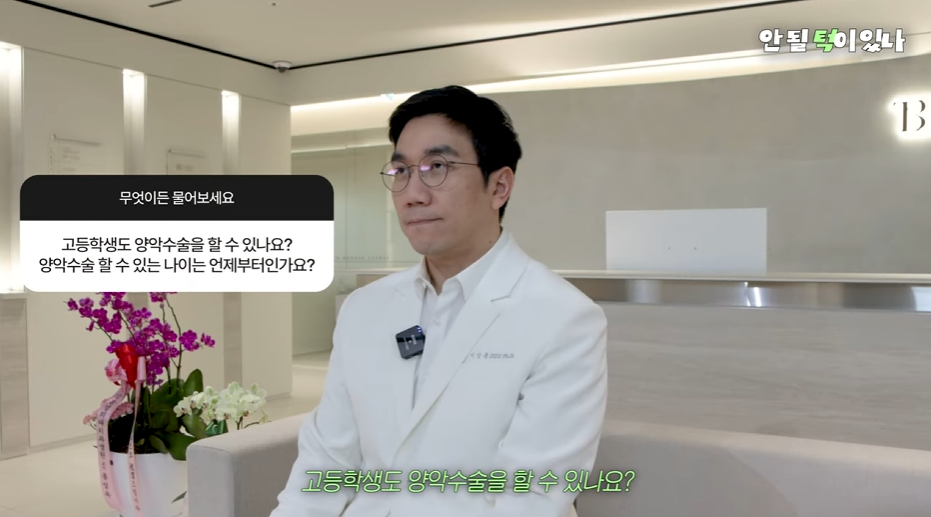
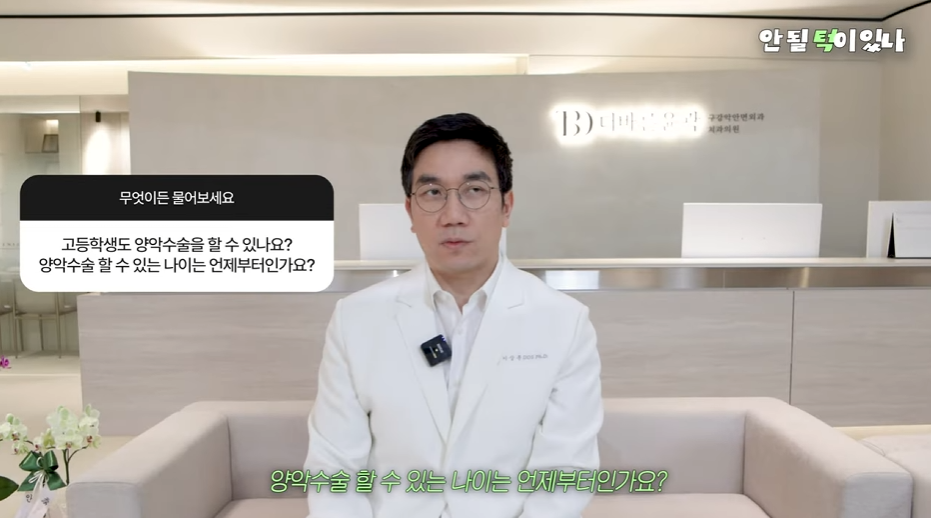
Q2. Is it possible for a high school student? What is the age when double jaw surgery can be performed?

It is a principle to perform double jaw surgery when growth has completely finished. On average, growth is slightly faster. A woman in her second year of high school, A male in his final year of high school The condition allows for surgical intervention. However, as growth periods vary individually, it is advisable to objectively confirm whether growth has ended through analysis of hand X-rays, etc., before deciding on the timing of the surgery.

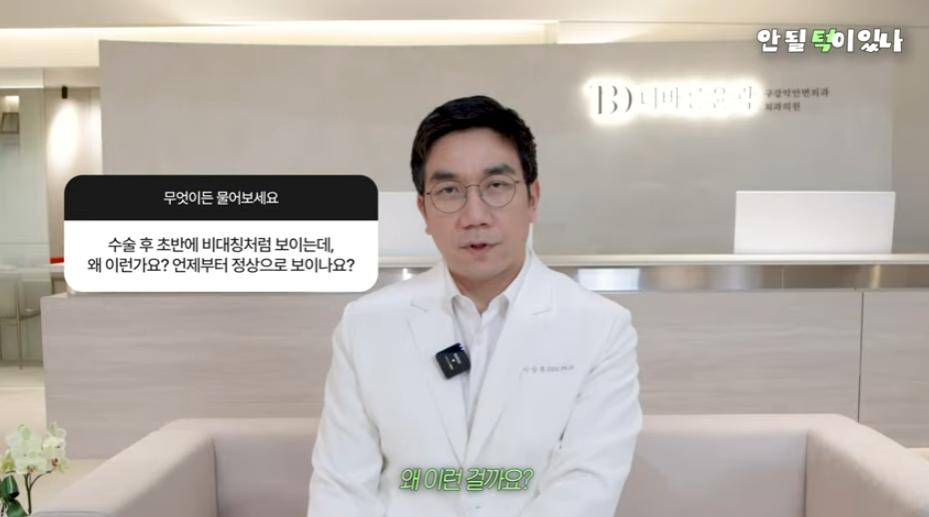
Q.3 Why might my face appear asymmetrical in the early stages after surgery?

Even if the skeleton itself was operated on normally with symmetry, the face may appear asymmetrical in the early stages of surgery, and there are two main reasons for this.

  1. Difference in swelling from both sides: In the early stages of surgery, swelling on both sides may subside at different rates, which can temporarily make asymmetry appear more prominent.
  2. Soft tissue adaptation lag: Even if the skeleton moves to the center, there will be a time lag until the flesh, which was aligned with the existing frame, adjusts and settles into the new bone positions.

What are the precautions to avoid during the recovery period?

To ensure a safe recovery and prevent possible side effects, you must limit the following:.

  • No alcohol or smoking You should avoid it as it increases the possibility of inflammation and slows down overall recovery.
  • Limit intake of solid foods: You need to be careful because if you chew hard foods too quickly before your jawbone is stably fixed, there is a risk that the internal fixation screws may loosen or the fixed bone may shift from its position.

Q.5 What are the correct ways to apply cold and hot compresses?

  • Cold compress (3-5 days post-surgery): It is important to constrict blood vessels to reduce initial bleeding and control swelling. If a warm sensation remains on the face, it can continue for up to a week, but if it persists excessively beyond that, it can impede blood flow, actually slowing down recovery and preventing swelling from subsiding.
  • Warm compress (after): Promotes blood circulation to help absorb remaining swelling.
  • The right way: Wrap ice or a pack in a towel Hold it for about 10 to 15 minutes, then rest for 10 to 15 minutes.Repeating it again and again is helpful.

We hope this has been a helpful reference for those who need information about double jaw surgery due to severe jaw protrusion, facial asymmetry, or severe malocclusion, or for those who are curious about the process of establishing a safe surgical plan tailored to their needs. By carefully analyzing the patient's condition with 3D data, we can establish a safer and more appropriate course of action.

In short, Dr. Lee Sang-hoon, Chief Director, The Bareun Outline Oral and Maxillofacial Surgery Dental ClinicIt was. Thank you.

Healthcare Institution Name: The Right Contour Oral and Maxillofacial Surgery Center Address: 2nd and 4th floors, 7 Seojeon-ro, Busanjin-gu, Busan Metropolitan City Medical professional explanation: Chief Director Lee Sang-hoon (Oral and Maxillofacial Surgeon)

※ All surgeries may cause side effects such as bleeding, infection, and nerve damage depending on the individual's condition. Therefore, please make a careful decision after sufficient consultation with a specialist.

When does facial bone contouring surgery swelling go down?
Recovery Period, Meals, and Flight Schedule Summary

Hello. Located near Seomyeon Station in Busan, The Right Contour Oral and Maxillofacial Surgery Center Director, Oral and Maxillofacial Surgeon Sang-hoon Leeis the value.

One of the most frequent questions from those planning orthognathic surgery (jaw corrective surgery) is regarding the schedule for returning to daily life after the procedure.

“How much annual leave do employees need?”
“When can I start having regular meals?”
“When is it safe to fly after surgery?”, etc.
I am looking for a period-specific guideline for stable recovery.

Double jaw surgery is a surgical procedure that corrects and fixes the position of the upper and lower jaws. Therefore, an absolute healing period is required until the separated jawbones fuse and the surrounding soft tissues stabilize. During this process, side effects such as bleeding, infection, and nerve damage may occur depending on individual constitution and condition, so it is crucial to strictly adhere to the precautions for each stage.

Based on the YouTube video content, patients frequently ask about Post-Double Jaw Surgery: Recovery Process and Return Schedule by StageI will let you know.

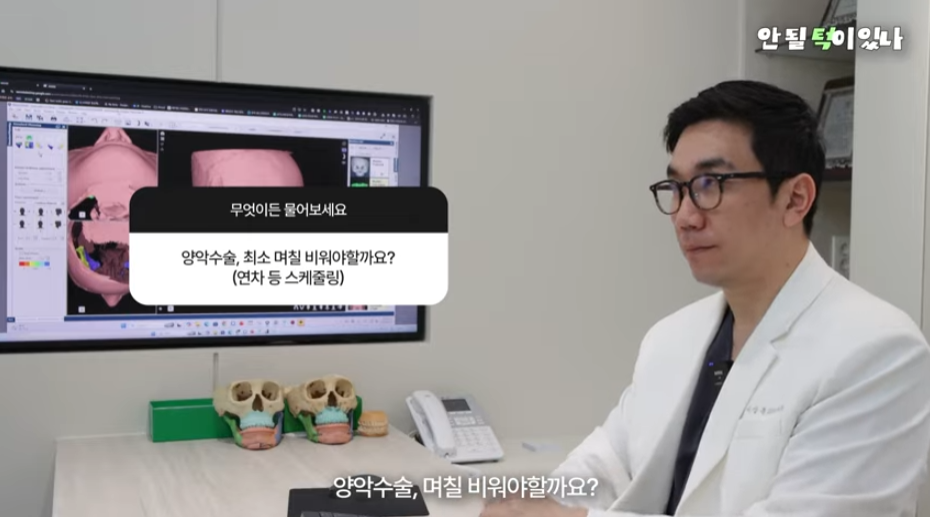
Q1. Double jaw surgery, annual leave & scheduling?

It typically takes until the patient can resume normal daily social activities and regular functions after surgery About a monthIt takes a period of healing.

For employees, schedules are coordinated based on individual annual leave situations, and for initial intensive recovery, if possible About two weeksIt is recommended to secure a break period. A common method is to schedule annual leave for about a week, linking it with public holidays or weekends.

The significant swelling that occurs after surgery begins to gradually decrease after one week, so it's important to get plenty of rest at home during the first week. General We inform you that it is possible to work at the office wearing a mask starting from the second week after surgery for office jobs.

However, for professions that require a lot of speaking or precise pronunciation (instructors, service industry workers, etc.), speech may be somewhat slurred in the second week, so it is advisable to plan for a longer recovery period based on the nature of your job.

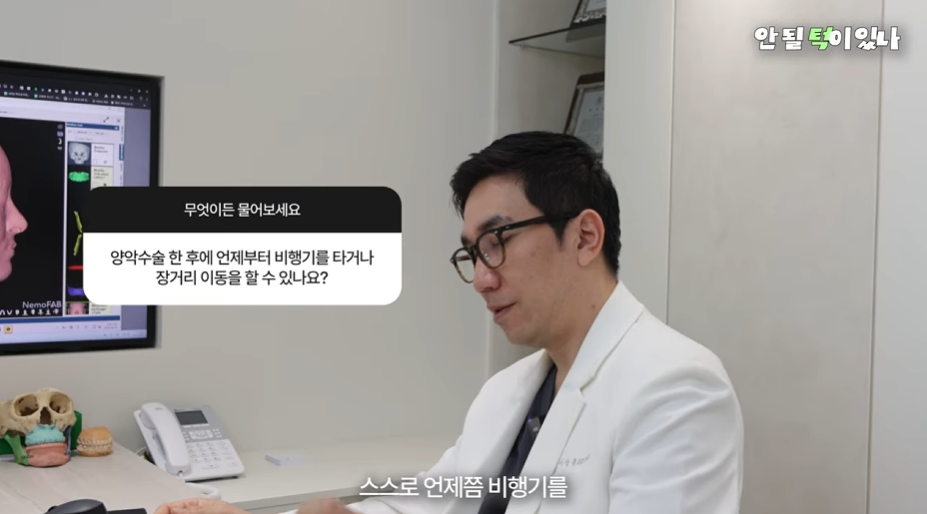
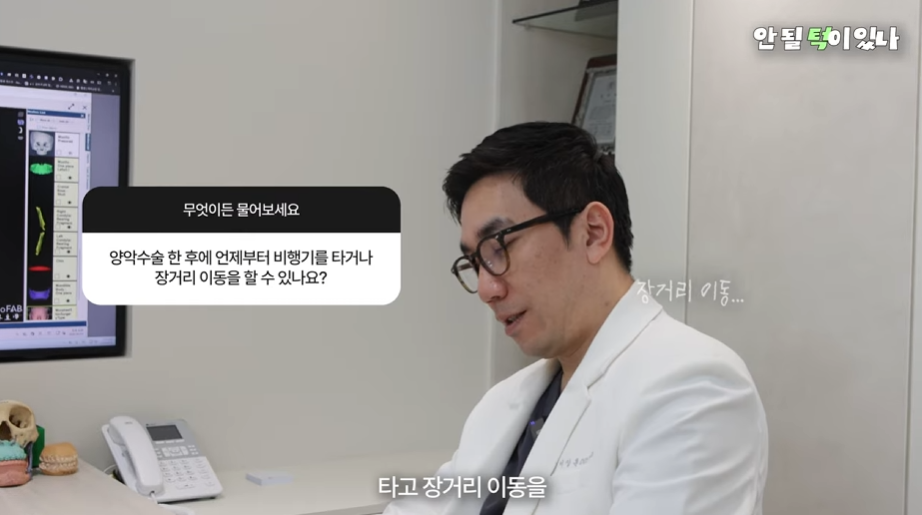
Q2. When is long-distance travel possible after double jaw surgery? (+ Airplane)

For patients residing in rural areas or abroad, consideration must be given to air pressure and physical impact when selecting transportation.

Long-distance travel by car or public transportation, under the condition that the patient is a passenger and remains still during travel, after surgery Please note that it is possible from one week after the date.

For air travel We recommend at least one month after surgery. During takeoff and landing, airplanes create pressure differences due to changes in altitude. After double jaw surgery, the Eustachian tube (a muscle that regulates ear pressure) located behind the upper jaw (maxilla) may temporarily have reduced pressure regulation function due to positional changes and swelling of the surrounding tissues. A stabilization period of over a month is necessary for the safe adaptation of the ear and the structures above the maxilla. (However, in exceptional cases, patients may be able to travel for short-distance flights after one week under the judgment and close observation of medical staff.)

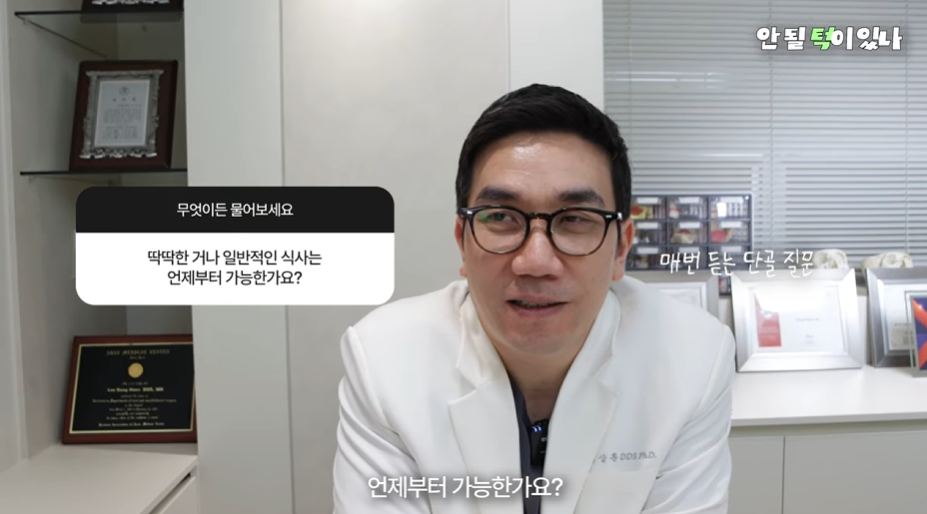
Q3. When can I start eating regular food?

Normal chewing is required for regular meals after surgery four weeksThe principle is to start step-by-step. You must strictly adhere to the diet for each stage so that the fixation pins can stably maintain the bone.

Meal stages by period

Week 1: Consume liquids and gruel with no solids. Week 2: Consume soft, non-coarse porridge. Weeks 3-4: Transition to rice soaked in broth or moderately moist cooked rice.

Precautions for use by menu

For samgyeopsal, thinly sliced pork belly like daepae samgyeopsal can be cautiously introduced starting from the third week, while frozen pork belly should wait until one month, and thick, whole pork belly cuts until At least two months It is safe to consume after checking for stability over time.

Fiber-rich foods, including kimchi, also require caution. Soft, fresh kimchi that isn't tough may be possible around the one-month mark, but foods with strong fibers, like dried radish greens or aged kimchi, which require prolonged, vigorous chewing, Two to three months or more You should avoid intake.

Foods that require excessive force on the teeth or are sticky, such as boiled octopus, dried squid, hard popcorn, or caramel, are strictly prohibited in the early stages of surgery (within one month). If the fixed pins loosen or deform due to early fluid chewing, there is a risk of revision surgery due to malocclusion, so food should be cut into the smallest possible pieces with scissors to distribute the load on the teeth. We would like to emphasize this.

Q4. How long will it take until surgery?

Many patients wish to proceed with surgery immediately after diagnosis, but since double jaw surgery alters anatomical structures, a systematic preparation period is essential. Especially in cases of skeletal underbite (prognathism), the teeth are often compensatorily tilted to accommodate the misaligned bone structure.

To form a normal occlusion after surgery, these teeth must be returned to their original anatomical positions Orthodontic treatment processThis is followed by a preparatory phase that takes anywhere from 3 months to 1.5 years, depending on the patient's dental condition., Please note that the average preparation period required is 6 months to 1 year.

Performing surgery first and then correcting it afterward through digital simulation analysis, depending on the patient's condition ‘Surgery first, then orthodontics’ It can review the method, thereby aiming to shorten the overall treatment period. However, this cannot be applied to all skeletal conditions, and precise diagnosis by an oral and maxillofacial surgeon must precede it to minimize prediction error margins. (For reference, facial contouring surgery that only refines the outer bone without moving the skeletal tissue can be performed within a few days after pre-examination.)

Double jaw surgery is a surgical treatment that involves not only aesthetic changes to appearance but also anatomical functional reconstruction, including precise dental occlusion, temporomandibular joint stability, and airway space expansion.

To achieve safe and sophisticated results, we recommend establishing a long-term and systematic treatment plan through thorough consultation with an oral and maxillofacial surgeon at a medical institution equipped with advanced 3D CT and precision analysis equipment.

Thank you.

The Barun Contour Oral and Maxillofacial Surgery Dental Clinic Address: 7 Seojeon-ro, Busanjin-gu, Busan Metropolitan City, 2nd and 4th floors (near Busan Metro Seomyeon Station Exit 8) Services: Double jaw surgery, facial contouring, Oral and Maxillofacial Surgery specialist Medical Staff: Oral and Maxillofacial Surgery Specialist / Chief Director Sanghoon Lee

※ All surgeries and treatments may cause side effects such as bleeding, infection, nerve damage, and malocclusion depending on individual anatomical characteristics. Therefore, please consult with a specialist before surgery and make a careful decision.

Orthodontics vs. Double Jaw Surgery: Which Treatment is Right for Me?

Hello. This is Dr. Sanghoon Lee, a specialist in Oral and Maxillofacial Surgery at The Bare Outline Oral and Maxillofacial Surgery Dental Clinic. “Will my case be resolved with braces alone, or will surgery be necessary?” This is the first challenge faced by those with jaw concerns. While orthodontic technology has advanced recently, increasing the limits of tooth movement, skeletal issues still remain difficult to resolve with orthodontics alone. Based on today's video content, we will clearly organize those standards.

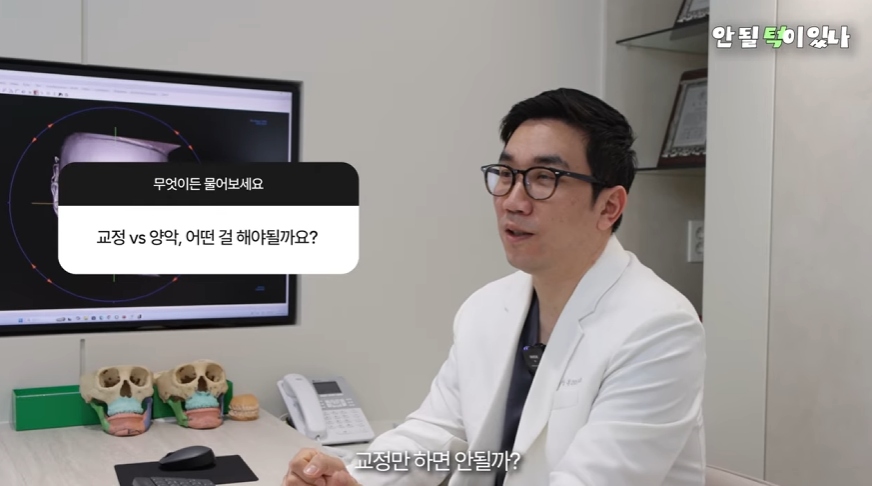
Q.1 Orthodontics vs. Double Jaw Surgery: Which Treatment Do I Need?

Many patients visit the Department of Oral and Maxillofacial Surgery for skeletal problem correction after diagnosis and orthodontic treatment. If the goal is simply to correct the bite, orthodontic treatment alone without surgery may be performed. However, Orthodontic treatment moves teeth and does not fundamentally change the position or size of the jawbone itself. If skeletal prognathism patients undergo orthodontic treatment without surgery, it can result in a compromise treatment where the lower teeth are excessively tilted inwards to achieve occlusion. In this case, while the teeth may fit together, the aesthetic changes will be minimal, or the teeth moving inwards may paradoxically make the jaw appear more prominent. Therefore, If you desire skeletal improvement and fundamental problem-solving, jaw surgery (orthognathic surgery) would be appropriate.

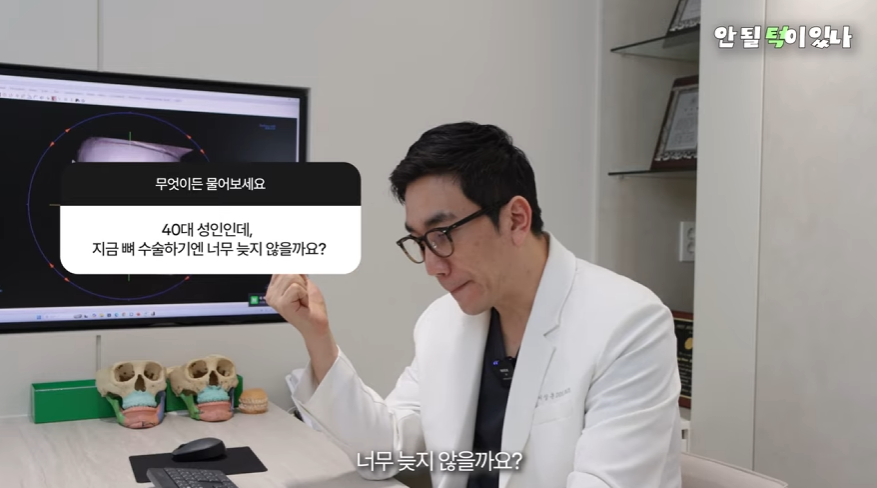
Q.2 I'm an adult over 40. Is it too late for surgery?

Older adults and middle-aged patients sometimes hesitate about whether they are eligible for surgery. To get straight to the point, age itself is not an absolute limiting factor for surgery if there's a clear need for skeletal improvement. For middle-aged individuals, surgery may be performed not only for aesthetic purposes but also for functional improvements, such as sleep apnea caused by severe skeletal malocclusion or a receding chin. However, compared to those in their 20s and 30s, the recovery rate of soft tissues after surgery may be relatively slower. Therefore, it is important to meticulously pre-diagnose whether one's overall health condition can smoothly withstand general anesthesia and the surgical procedure, rather than focusing on age itself.

Q.3 Is orthodontic treatment absolutely necessary before double jaw surgery?

Orthognathic surgery is academically equivalent to ‘orthognathic surgery'.This treatment corrects the relationship between the teeth and jawbone, so orthodontic treatment is usually involved. In the past, a pre-surgical orthodontic period to align the teeth was mandatory. However, with recent advancements in digital simulation technology and surgical techniques, the ‘surgery-first, orthodontics-later’ approach, where the skeletal relationship is corrected first through surgery and then orthodontic treatment proceeds, is also being actively applied. Except for extremely rare cases where the original teeth occlusion is very good and stable alignment is maintained even after surgery, orthodontic treatment is planned in some form for stable results.

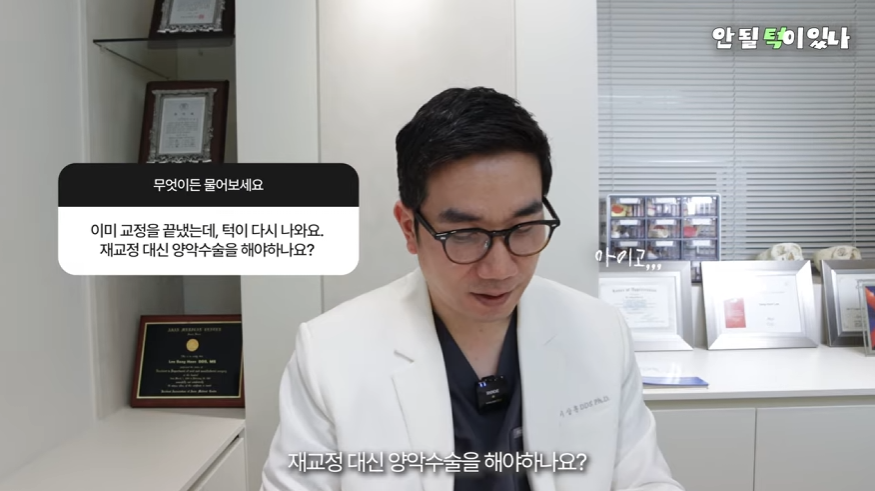
Q.4 If you feel your jaw is protruding again after completing orthodontic treatment, what should you do?

Some individuals experience a relapse where their jaw protrudes or their bite becomes misaligned again over time, even after completing orthodontic treatment in the past. This recurrence can occur if there was still jawbone growth remaining during the orthodontic treatment, or if microscopic shifts in the bone occurred due to an imperfectly stabilized bite. In such cases, it's often necessary to establish a systematic re-treatment plan that combines re-orthodontic treatment with bimaxillary surgery to fundamentally correct the collapsed skeletal structure and dental occlusion.

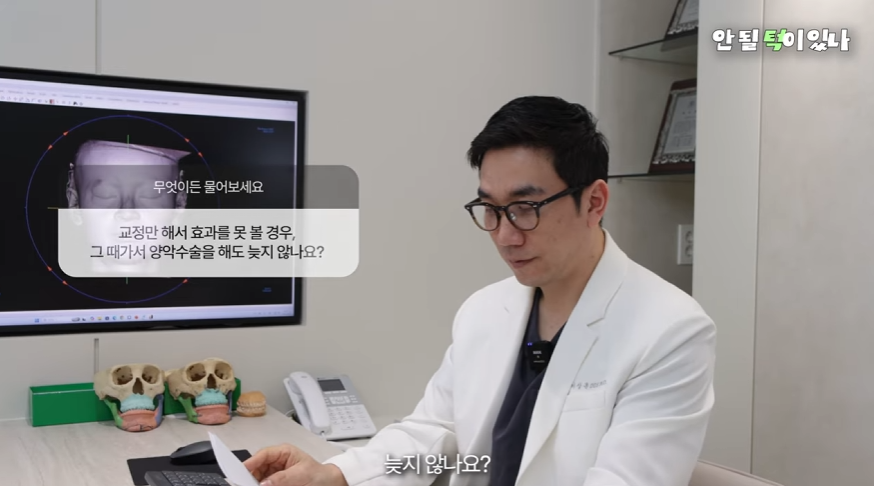
Q.5 If orthodontics are ineffective and surgery is considered later, what are the options?

Due to the burden of surgery, some patients opt for orthodontic treatment only, even in skeletal cases. However, they sometimes do not achieve their desired results and then decide to undergo surgery. In such cases, surgery cannot be performed immediately because the teeth have already been moved inward through compensatory orthodontics. A decompensation process is necessary to move the teeth outward, which were previously pushed inward, to achieve a normal bite during surgery. This can lengthen the treatment period and increase the physical and financial burden on the patient. Therefore, it is advisable to accurately distinguish between skeletal and dental malocclusions using precise equipment such as 3D CT during the initial diagnosis and to choose the correct treatment direction through thorough consultation with a specialist.

Jaw correction surgery is a process that prioritizes the anatomical functional reconstruction, including not only aesthetic changes but also dental occlusion, temporomandibular joint function, and airway space. We recommend establishing a treatment plan suitable for you based on precise diagnosis.
This was Dr. Sanghoon Lee, the head doctor of The BareunGwak Oral and Maxillofacial Surgery Dental Clinic. Thank you.

Healthcare Institution Name: The Right Contour Oral and Maxillofacial Surgery Center
Address: 2nd and 4th floors, 7 Seojeon-ro, Busanjin-gu, Busan Metropolitan City
Medical professional explanation: Chief Director Lee Sang-hoon (Oral and Maxillofacial Surgeon)


※ All surgeries may carry risks of side effects such as bleeding, infection, and nerve damage, depending on the individual's condition.,
Please make your decision carefully after sufficient consultation with a specialist.

Why should double jaw surgery be performed by an oral and maxillofacial surgeon?

Hello. This is Dr. Lee Sang-hoon, a specialist in oral and maxillofacial surgery at The Bareun Yoon-gwak Oral and Maxillofacial Surgery Dental Clinic. Many people, when planning bimaxillary surgery, “Which department should I choose?” You are considering it. Orthognathic surgery is surgery that addresses the structure and function of the facial skeleton.Therefore, it is important to thoroughly check the expertise and training background of the medical staff. Here's why oral and maxillofacial surgeons are specialized for this surgery.

Q1. Why you need to check the Oral and Maxillofacial Surgery department for double jaw surgery

Bimaxillary osteotomy is a surgery that restores occlusion and temporomandibular joint function through the repositioning of facial bones. Oral and maxillofacial surgery is a department that specializes in the skeletal and soft tissues of the oral and maxillofacial regions. Plan surgery based on anatomical knowledge of the jawbone and dental occlusion.because, Surgical approach considering functional stabilityThis is possible.

Q.2 What is the essence of double jaw surgery?

The essence of double jaw surgery is not merely to alter appearance. It prioritizes functional reconstruction by precisely repositioning facial bones as functional units, considering jaw joint movement, occlusion, and even breathing space (airway). When functional improvement is supported, the overall facial balance and aesthetics can naturally harmonize.

Q.3 What should be considered when choosing a hospital?

The ‘quality of analysis' is more important than the quantitative aspects of surgery. During my 14 years of clinical experience, I have personally analyzed 3D simulation data and designed surgical devices tailored to each patient's bone structure. It is advisable for patient safety to verify how deeply medical professionals consider the patient's case and participate directly in the entire pre-operative process to plan precisely.

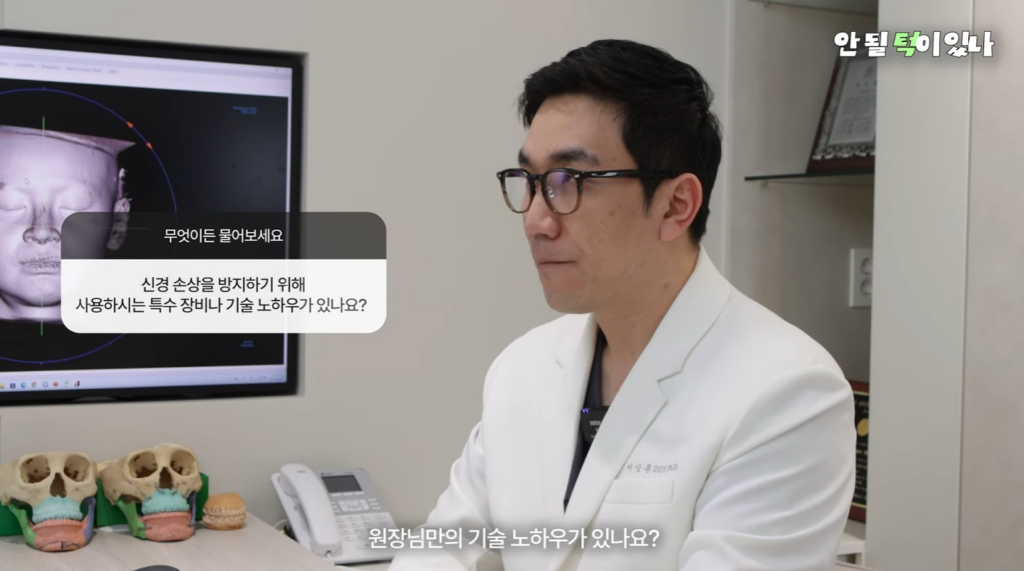
Q.4 Procedures for Preventing Nerve Damage

Minimizing the risk of nerve damage during double jaw surgery is a critical task for medical staff. Before surgery, we meticulously identify the nerve pathways based on precise CT scans and simulate the possible range of bone movement and nerve exposure during surgery. We strive to reduce the possibility of nerve damage through systematic surgical planning and prediction.

Q.5 Do you also consider aesthetic aspects?

Yes, of course. Oral and maxillofacial surgery does not only consider functional aspects. We objectively analyze the proportions of facial bones and the harmony of soft tissues to fully consider aesthetic improvements. Based on functional stability, we strive to achieve harmonious results for each patient's face.

Since double jaw surgery is a life-changing major surgery that is performed only once in a lifetime, selecting the right department for the first step and the professionalism of the medical team are of utmost importance.

Currently, due to a prominent chin, facial asymmetry, or severe malocclusion, If you are considering double jaw surgery, or are curious about a safe surgical plan that's right for you Please feel free to visit us anytime for a consultation. We will carefully analyze your condition with 3D data and find the safest and most appropriate path for you together.

This was Dr. Sanghoon Lee, the head doctor of The BareunGwak Oral and Maxillofacial Surgery Dental Clinic. Thank you.

Healthcare Institution Name: The Right Contour Oral and Maxillofacial Surgery Center
Address: 2nd and 4th floors, 7 Seojeon-ro, Busanjin-gu, Busan Metropolitan City
Medical professional explanation: Chief Director Lee Sang-hoon (Oral and Maxillofacial Surgeon)


※ All surgeries may carry risks of side effects such as bleeding, infection, and nerve damage, depending on the individual's condition.,
Please make your decision carefully after sufficient consultation with a specialist.
A message for a first-time double jaw surgery client

“You should verify whether you can trust 3D simulations of jaw surgery.”

The Bareun Profile Oral and Maxillofacial Surgery Dental Clinic, Director Lee Sang-hoon

Hello. I am Dr. Lee Sang-hoon, a specialist in Oral and Maxillofacial Surgery.

One of the most frequent questions people ask during consultations for double jaw surgery is whether the 3D simulation of their face on the monitor in the consultation room can truly become their actual post-surgery appearance.

However, surprisingly many people decide to have surgery after only hearing that the results “look similar,” without receiving an accurate explanation. In fact, a considerable number of those who come for revision surgery consultations experience psychological distress due to unexpected results after perceiving the simulation results as a ‘matching future face." Therefore, I try to provide a realistic explanation of this aspect before surgery.

Why 3D Simulation is Important

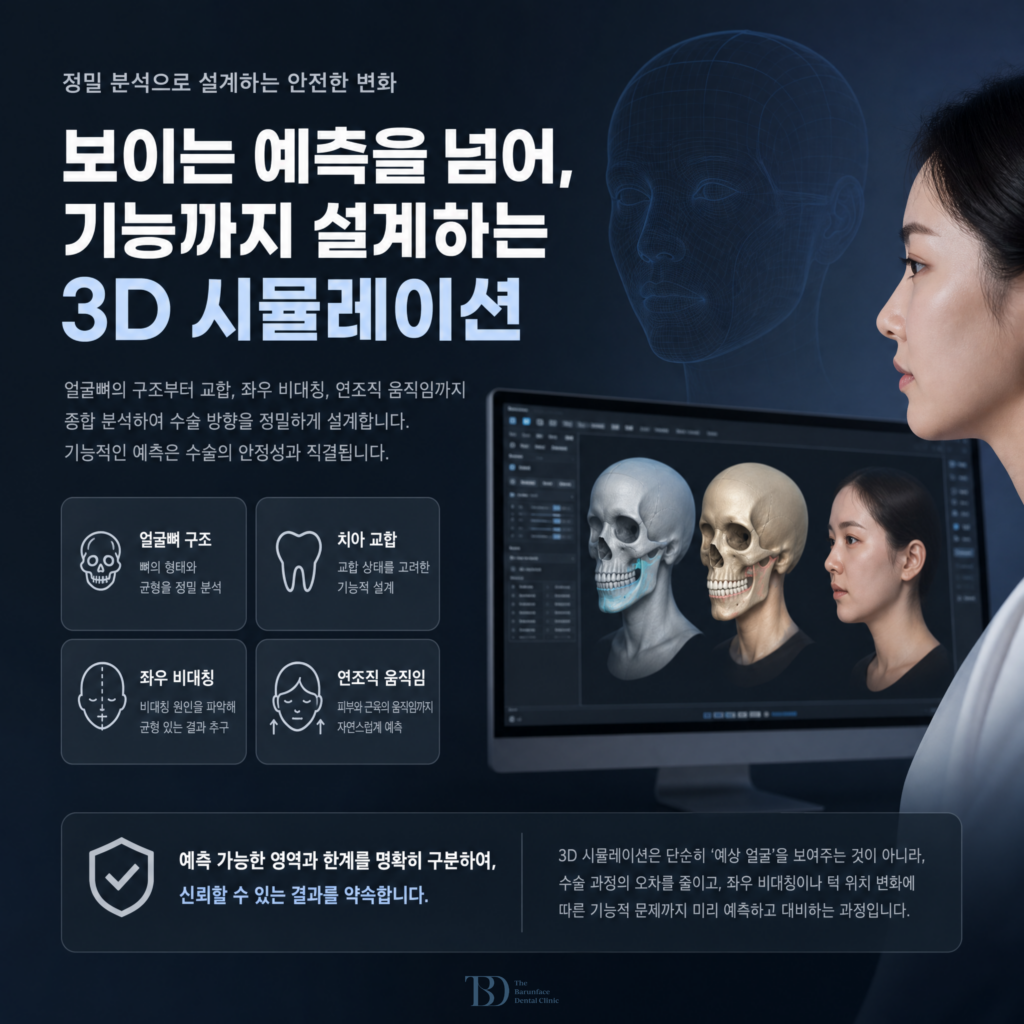
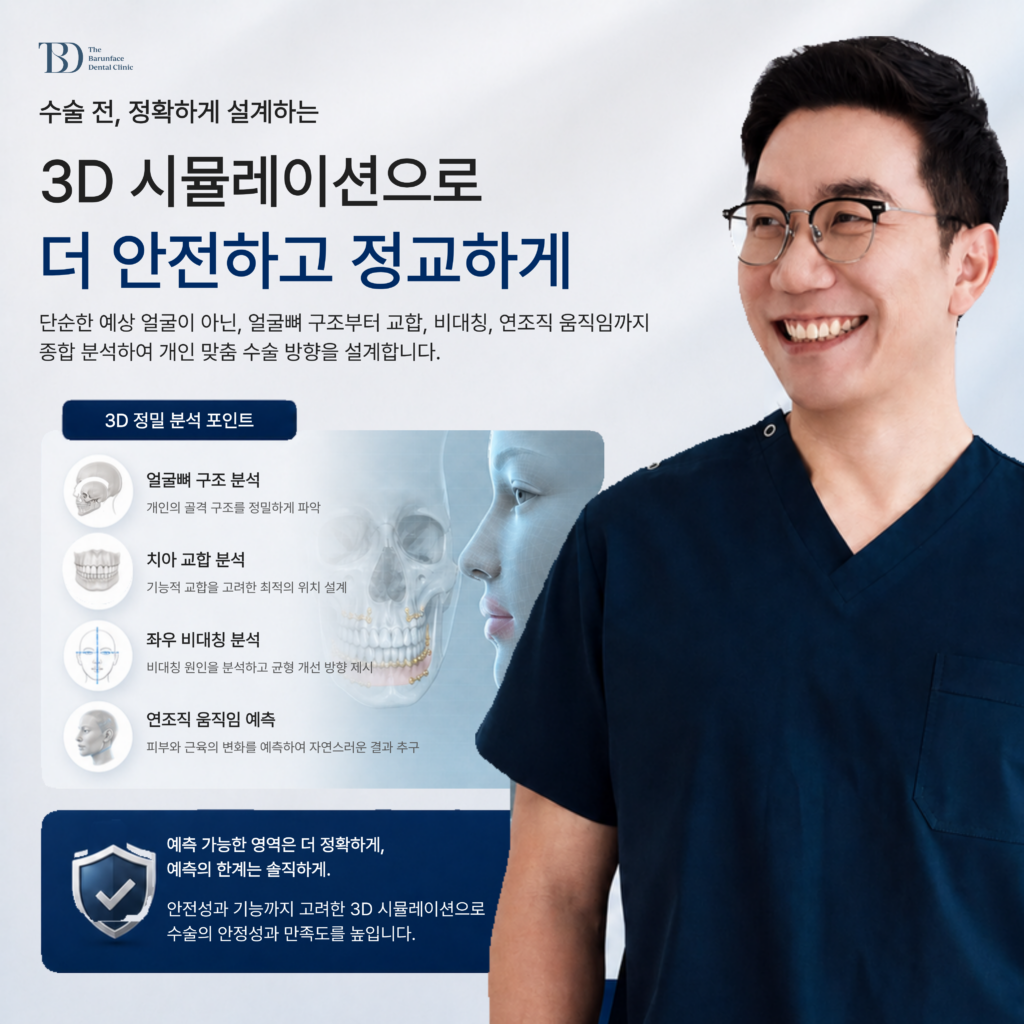
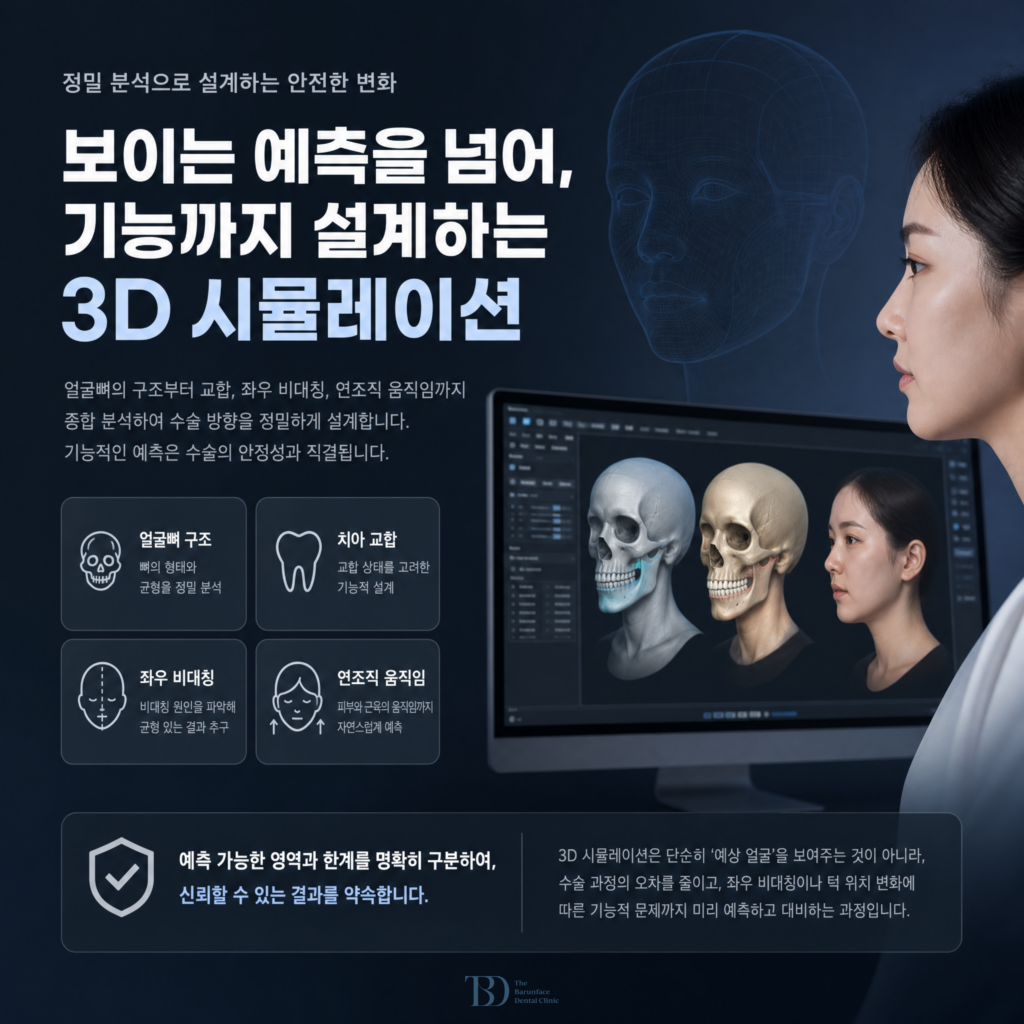
Recently, three-dimensional (3D) simulation examinations are increasingly being performed before bimaxillary and facial contouring surgeries. This goes beyond simply merging facial photos., Facial bone structure, dental occlusion, left-right asymmetry, soft tissue movementIt is a process of comprehensively analyzing and designing the surgical direction.

Predictions, especially in terms of functionality, are crucial as they are directly linked to surgical stability. The problem is that patients often fail to distinguish between “predictable areas” and “areas with limitations in predictability.”.

The purpose of 3D simulation is not simply to show a ‘predicted face.' In reality, it can be highly meaningful in reducing errors that may occur during surgery and analyzing functional problems in advance due to left-right asymmetry or changes in jaw position.

Especially in surgeries where both the upper and lower jaws are moved simultaneously, such as double jaw surgery, even a difference of a few millimeters can alter occlusal stability and facial balance. Therefore, the precision of planning in the pre-operative stage directly impacts the results.

Areas that show high accuracy

Current 3D analysis systems predict outcomes by considering individual variations in soft tissue response, rather than just simple technical errors. This has been consistently presented in various academic studies.

In particular, predictions regarding bone movement and changes in occlusion are known to be relatively accurate. For example,

  • How should the positions of the upper and lower jaws be moved to achieve a functionally stable occlusion?
  • How your teeth fit together after surgery

Simulation results often show no significant difference from actual post-operative outcomes.

In other words, the part about “whether chewing function is stably recovered after surgery” can be considered to have high simulation reliability. This is also why maxillofacial surgery is called a reconstructive surgery for function, not just a simple cosmetic surgery.

Why can facial contours change slightly?

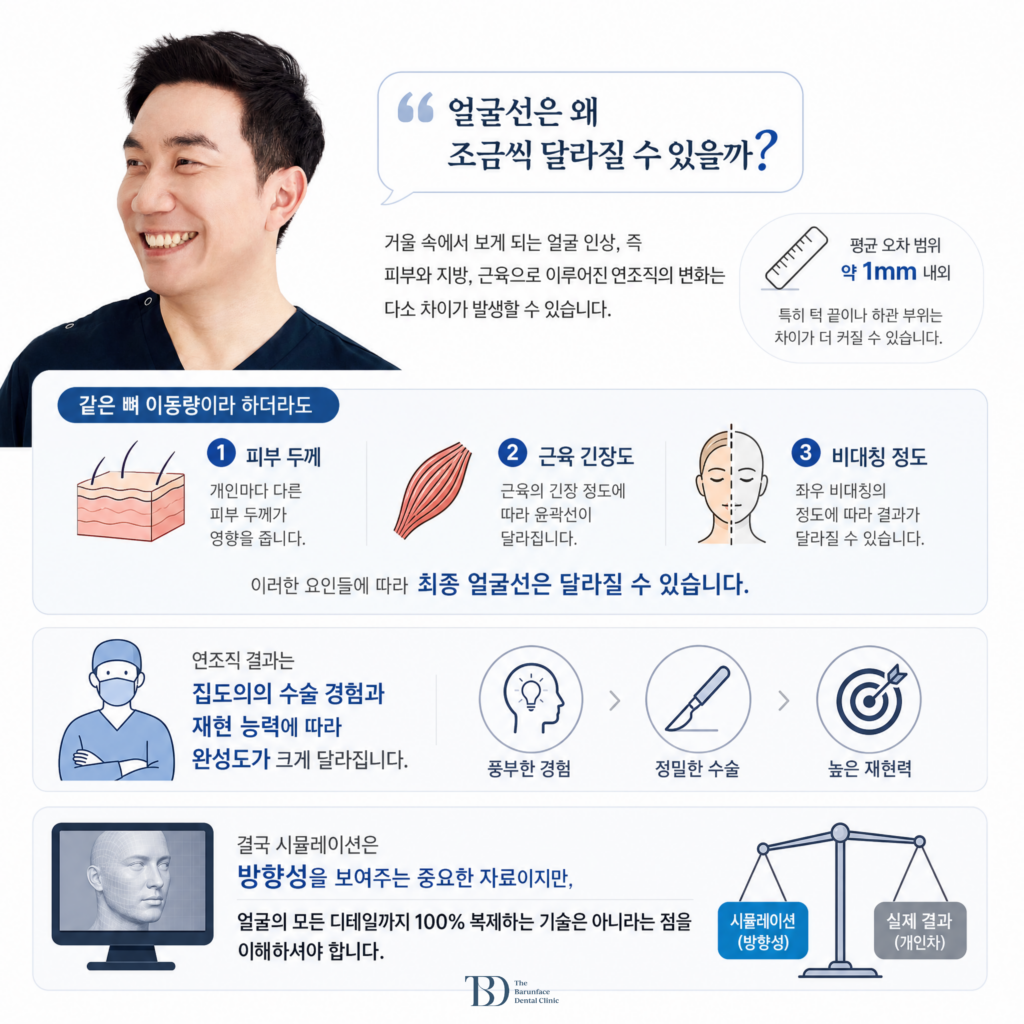
On the other hand, the facial impression seen in the mirror, meaning the changes in soft tissues made up of skin, fat, and muscle, can show some differences. Actual studies report an average error range of about 1mm, and this difference can be slightly larger, particularly in the chin or lower jaw area.

Even with the same amount of bone movement Skin thickness, muscle tone, degree of asymmetrybecause the final facial contour can change depending on this.

Furthermore, the quality of soft tissue results can vary significantly depending on the surgeon’s experience and ability to reproduce the procedure. Ultimately, while simulations provide valuable guidance, it is important to understand that they are not a technology capable of replicating every single detail of the face.

3 diagnostic criteria for stable results

When undergoing 3D simulation analysis, it's important not only to observe “how the face changes” but also to understand the criteria used for the analysis.

  • Is it based on high-resolution, multi-angle data that allows for precise analysis? A more precise analysis can be expected when various data, such as CBCT and 3D oral scans, are used together, rather than just simple photographs. How stereoscopically the facial bone structure, tooth alignment, and occlusal status are reflected can determine the completeness of the results.

  • 2) Whether the simulation is based on the face after recovery, excluding swelling Double jaw surgery may show different facial changes immediately after surgery and after recovery. Therefore, it is important to check whether the simulation shown in the consultation is a temporary initial appearance or based on the face after swelling has fully subsided.

  • 3) Is the diagnosis tailored to individual malocclusion and facial asymmetry characteristics? Even with the same double jaw surgery, the way soft tissue changes can vary depending on the degree of malocclusion, the characteristics of facial asymmetry, and the amount of jaw movement. Therefore, it is important to have customized analysis that reflects individual structural characteristics, not just simple average data.

A good consultation should be a process that sufficiently explains not just the outcome of “becoming prettier,” but also which parts show high accuracy and which parts can have individual variations.

Important processes for reducing error

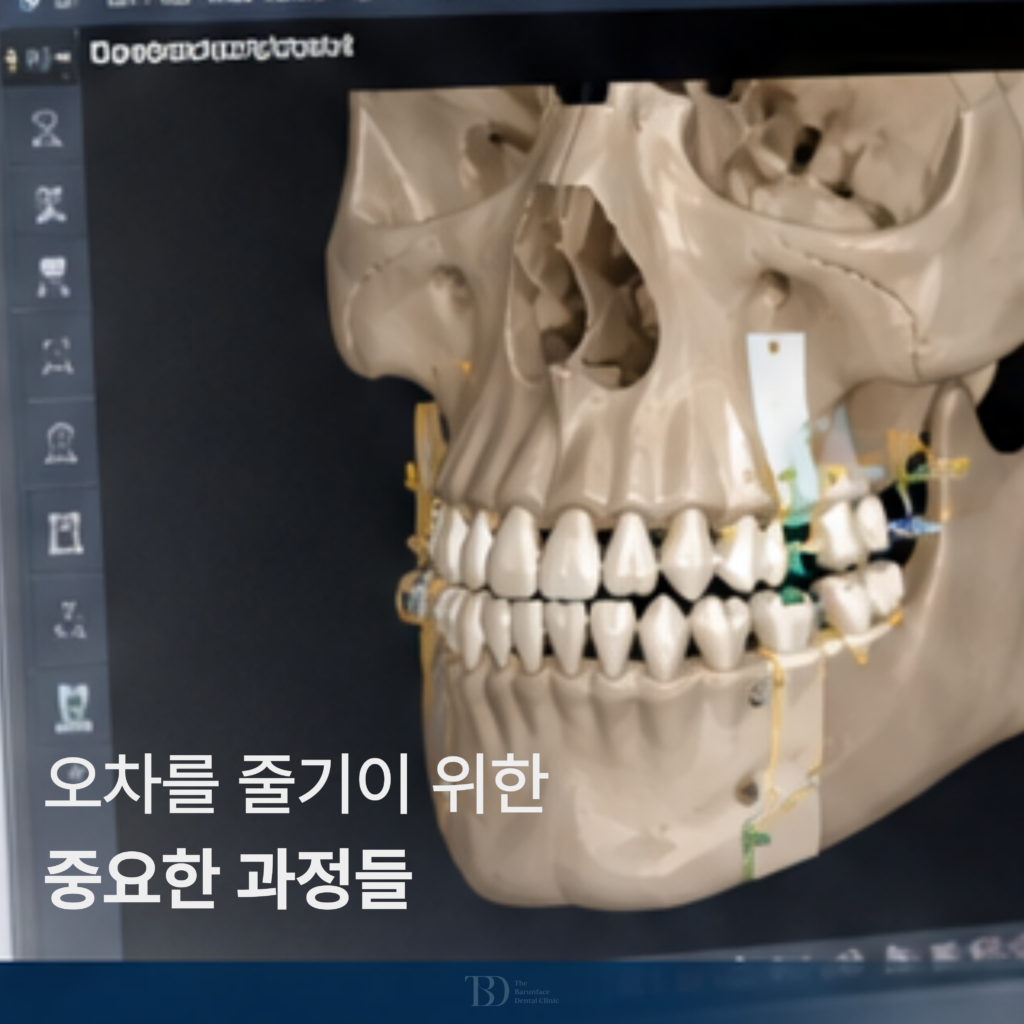
To achieve precise surgical outcomes, a good program alone is not enough. It must be accompanied by accurate measurement processes and the ability to reproduce the actual surgery. We analyze facial bone structure and occlusal status with CT scans, integrate intraoral scan and dental model data, and then develop a surgical plan based on this information.

In this process, we don't just look at the direction in which the jawbone is moved, but rather, Degree of left-right asymmetry, midline of teeth, chin tip position, temporomandibular joint conditionwill be considered together.

Afterward, surgical guides are created or 3D printing devices are utilized to precisely replicate the planned bone position in the actual surgery. In particular, for double jaw surgery, even a difference of a few millimeters can affect occlusal stability and facial balance, making it crucial to accurately reproduce the planned position during surgery.

Ultimately, the key is not the.

The important thing is an honest explanation.

A 3D simulation before orthognathic surgery is a process that can help in planning the procedure and understanding the intended outcome. However, patients should be aware that the simulation results do not necessarily correspond exactly to the actual changes in their facial appearance.

While there are areas with relatively high prediction accuracy, such as function and occlusion, changes in soft tissues like skin, muscles, and fat layers, as well as overall facial impression, can vary depending on an individual's healing process or tissue characteristics. Even during consultations for revision surgery, a considerable number of people say, “I wish I had received sufficiently detailed explanations about these aspects before the surgery.”.

So if you're considering surgery, rather than just looking at before-and-after photos,

  • How are the current skeletal structures and occlusal status analyzed?
  • To what extent is it predictable, and what parts can remain variables?

The process of receiving thorough explanations can be important. After all, orthognathic surgery is a procedure that requires consideration of functional stability and overall facial balance, rather than just a change in appearance.

The 3D simulation examination before double jaw surgery is much more profound than simply describing it as a technology that “shows you your face after surgery in advance.”. Movement of facial bones, changes in occlusion, temporomandibular joint stability, and soft tissue responseThis is because it is a process that requires a comprehensive consideration of all these factors.

In actual surgery, it is important to assess not just how much change can be made, but also what changes are realistically possible within the current facial structure and whether the results can maintain functional stability.

Many people tend to view simulation images as ‘finished results," but actual facial structures can change gradually over time due to the healing process, soft tissue changes, and muscle adaptation. Ultimately, what's important isn't just creating flashy prediction images, but accurately analyzing the current skeletal structure and occlusal status and finding the most balanced direction within those parameters.

It's completely natural to feel anxiety and have questions during the process of considering surgery. In fact, it's necessary to ask plenty of questions and receive explanations about what can be predicted accurately and what aspects carry a possibility of error.

In oral and maxillofacial surgery, we don't just consider facial shape; we also take into account the skeletal structure, function, nerve position, and the balance of soft tissues when planning surgery. If you've been deepening your concerns through repeated searches, we recommend starting with a process of accurately diagnosing and understanding your current facial structure and occlusal status.

Healthcare Institution Name: The Barun Contour Dental Clinic
Address: 2nd and 4th floors, 7 Seojeon-ro, Busanjin-gu, Busan Metropolitan City
Medical professional explanation: Chief Director Lee Sang-hoon (Oral and Maxillofacial Surgeon)


※ All surgeries may carry risks of side effects such as bleeding, infection, and nerve damage, depending on the individual's condition.,
Please make your decision carefully after sufficient consultation with a specialist.
Before jaw and facial contouring surgery in Busan,
The 5 most frequently asked questions by patients

Hello. I am Dr. Lee Sang-hoon, a specialist in Oral and Maxillofacial Surgery.

When I consult with people considering double jaw surgery or facial contouring surgery, in most cases, they have lived with stress about their facial shape for a long time, beyond just the purpose of improving their appearance.

However, when you start researching surgery in earnest, the things patients are most curious and worried about are not fully resolved through internet searches alone. As this is surgery that deals with the very structure of facial bones, we have compiled answers based on medical facts to the three questions that patients ask and worry about the most in a real clinical setting.

Q1. Don't you get better results by shaving off as much bone as possible?

Some people insist on having as much bone removed as possible during consultations to maximize the results. However, facial contouring surgery is not simply about shaving off a lot of facial bone.

Beyond bone, our faces are made of Nerve, temporomandibular joint, masticatory muscles (chewing muscles), skin saggingIt is organically connected. Therefore, what's important isn't “how much was removed,” but rather planning the surgery by considering the surrounding tissues and functions. An approach that considers anatomical structure and balance is more important than simply making it smaller.

Q2. Even if I have the same surgery as my friend, why are the results or effects different?

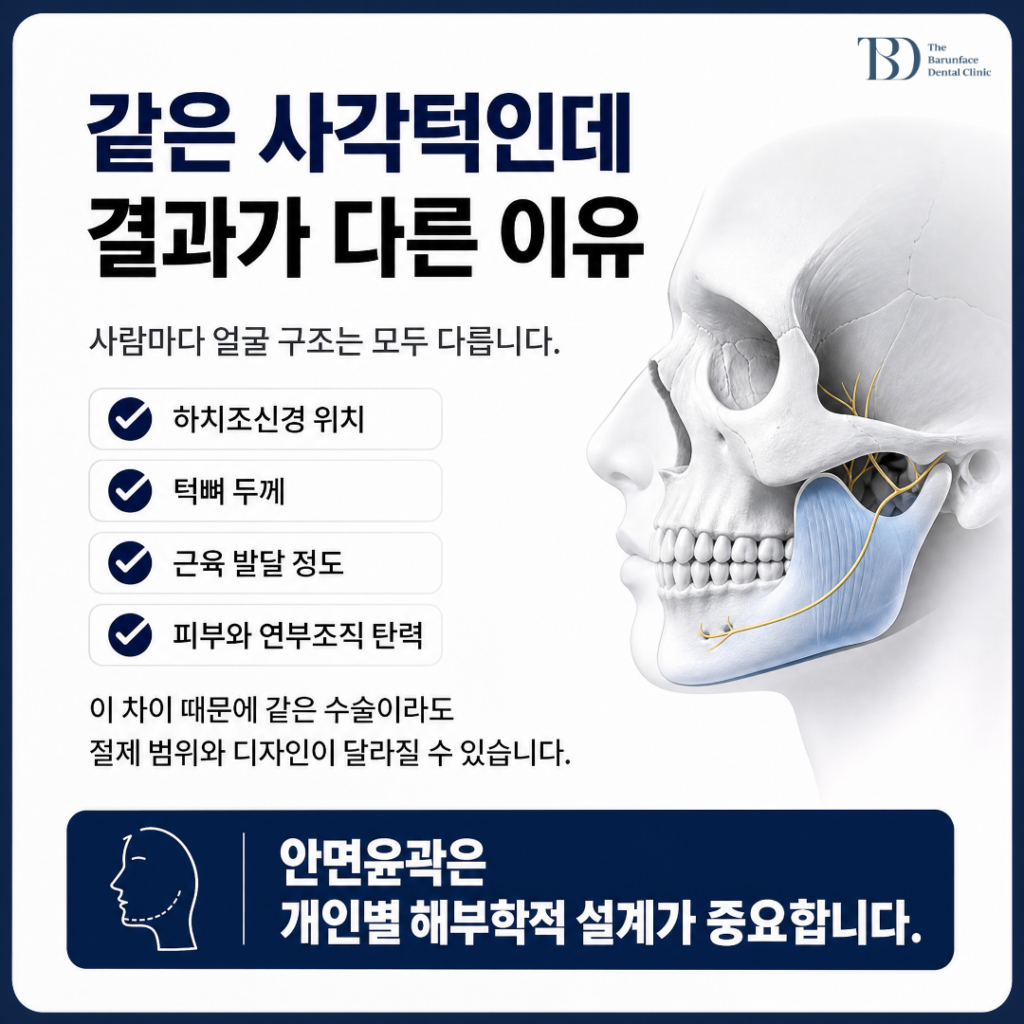
Even if they appear to have similar square jawlines at first glance, a 3D CT scan reveals that everyone’s facial structure is completely different.
  • The location and height at which the occipital nerve passes
  • The thickness of the jawbone itself
  • The degree of development of the muscles used for chewing
  • Skin and soft tissue elasticity

This difference is why the scope of resection and the overall design of the same square jaw surgery inevitably vary from patient to patient. This anatomical difference is precisely why you cannot directly apply someone else's review or standards found online to yourself.

Q3. What specific problems arise from excessive or unreasonable cutting?

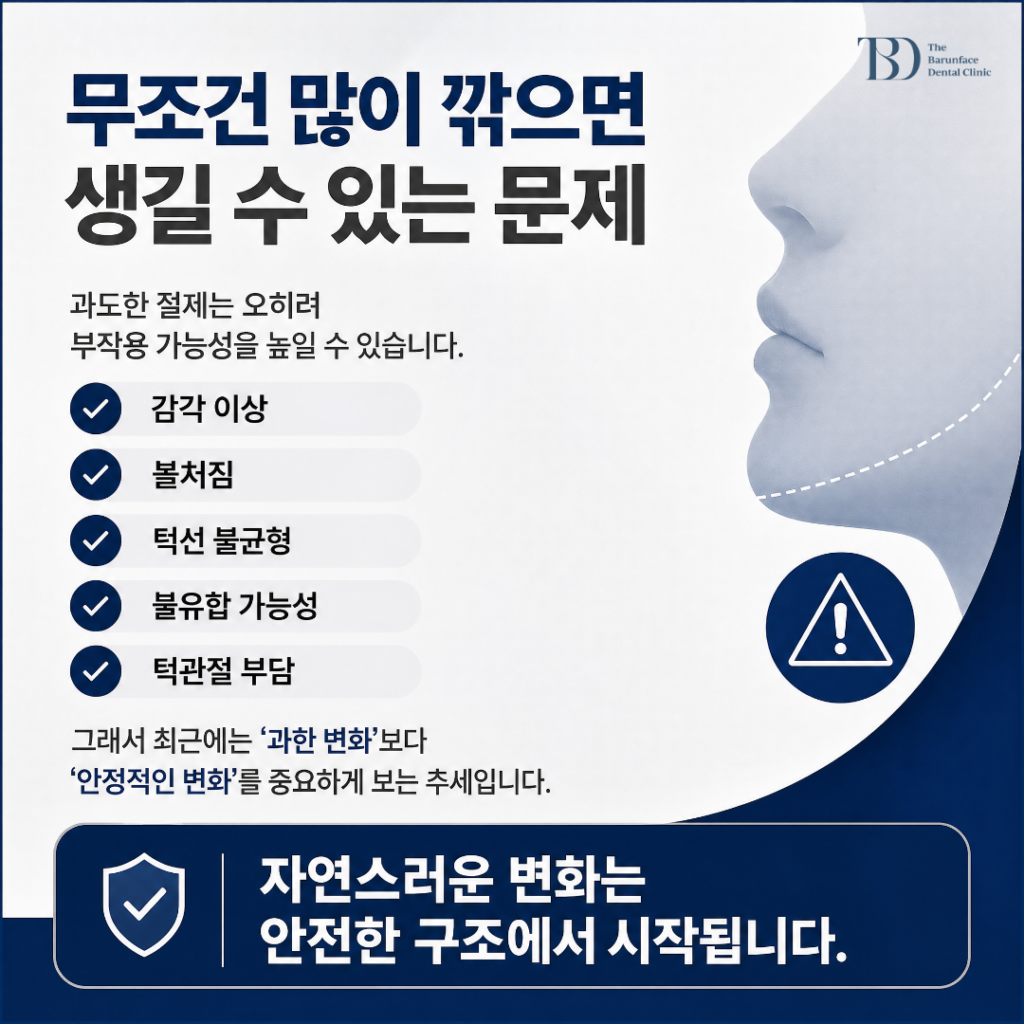
If the patient's structural limitations are ignored and excessive resection is performed due to greed, the possibility of side effects may increase.

Typical clinical problems that can arise include the following.

  • Numbness in the chin due to nerve irritation Paresthesia
  • Without bones to support the flesh, it cascades downwards. Sagging
  • Due to a jagged excision line Uneven jawline
  • A gap forming because the bone is not healing properly Possibility of nonunion
  • Due to changes in copyright TMJ strain

Because of this, there's a recent trend that emphasizes ‘changes considering function and structure‘ that do not strain the biological structure, rather than “excessive changes." "To achieve natural changes, consideration for structural stability is necessary.".

Q4. Is it true that facial bone reduction surgery can cause sagging or deformities later on?

Facial bone contouring surgery is not a simple procedure of just shaving down the bone and pushing it inward. This is because the chewing muscles strongly pull the cheekbones downward every time we chew food and speak throughout our lives.

To ensure that your facial contours remain intact over time following a bone reduction procedure, the bones must be securely and firmly stabilized. While your appearance in the mirror immediately after surgery is important, it is even more crucial to consider long-term structural stability as time goes on.

What should I check before surgery to avoid these side effects?

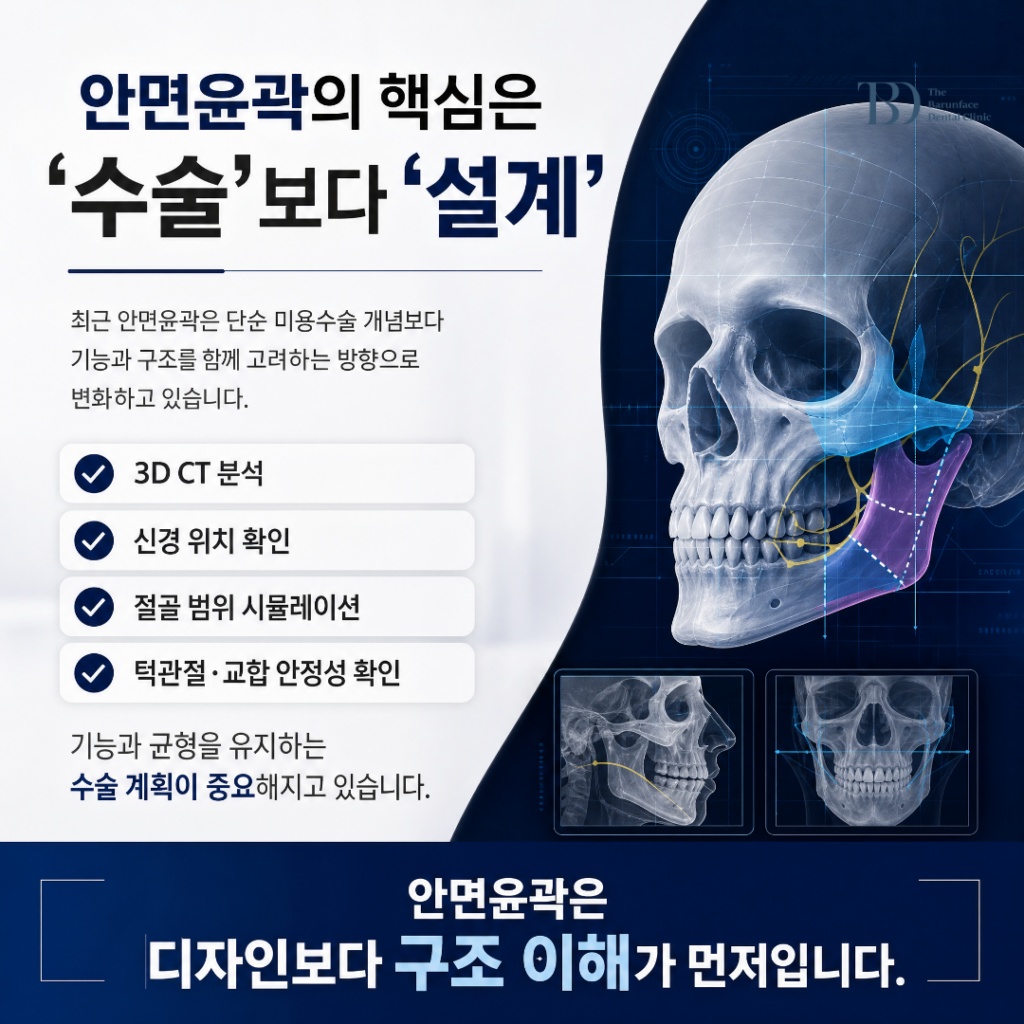
Recent facial contouring is changing in a direction that considers function and structure beyond simple aesthetics. Facial shape Masticatory function, temporomandibular joint movement, and occlusal balanceSince it is directly related, the ‘design" before the surgery becomes much more important than the surgery itself. The following steps are necessary for a safe surgical plan.

  • 3D CT Analysis: Precisely measure the three-dimensional skeletal structure and density
  • Nerve localization To identify major nerve pathways and reduce the possibility of damage
  • Osteotomy Range Simulation: Predicting the safe osteotomy range on a computer beforehand
  • Temporomandibular joint and occlusion stability check: Final check for any discomfort in functional movement after surgery

Ultimately, facial contouring is about the patient's individual It is important to fully understand the structure first.is the value.

It is difficult to judge the results of double jaw surgery and facial contouring surgery based solely on their appearance immediately after the procedure, as sufficient time is required for the tissues to fully stabilize. Therefore, rather than being impatient about “how much will change right now,” one should approach the decision cautiously, considering whether “my face will remain natural and functionally stable over time.".

For long-term safe results, every step must be systematically connected, from meticulous analysis and planning before surgery, to safety during surgery, and recovery management after surgery.

Getting an expert's objective assessment of my current bone structure and functional condition is the best way to alleviate my concerns. Thank you for reading this long text.

Healthcare Institution Name: The Barun Contour Dental Clinic
Address: 2nd and 4th floors, 7 Seojeon-ro, Busanjin-gu, Busan Metropolitan City
Medical professional explanation: Chief Director Lee Sang-hoon (Oral and Maxillofacial Surgeon)


※ All surgeries may carry risks of side effects such as bleeding, infection, and nerve damage, depending on the individual's condition.,
Please make your decision carefully after sufficient consultation with a specialist.